When you are buying your first serious watch, you obsess over the brand, the dial color, and the movement. But there is one spec that most beginners ignore—until it’s too late.
The Crystal. (That’s the clear glass covering the dial).
If you buy the wrong one, your beautiful new watch will look like a scratched mess within six months. If you buy the right one, it will look brand new for decades.
Here is the definitive guide to Sapphire vs. Mineral Glass—and why it matters for your wallet.
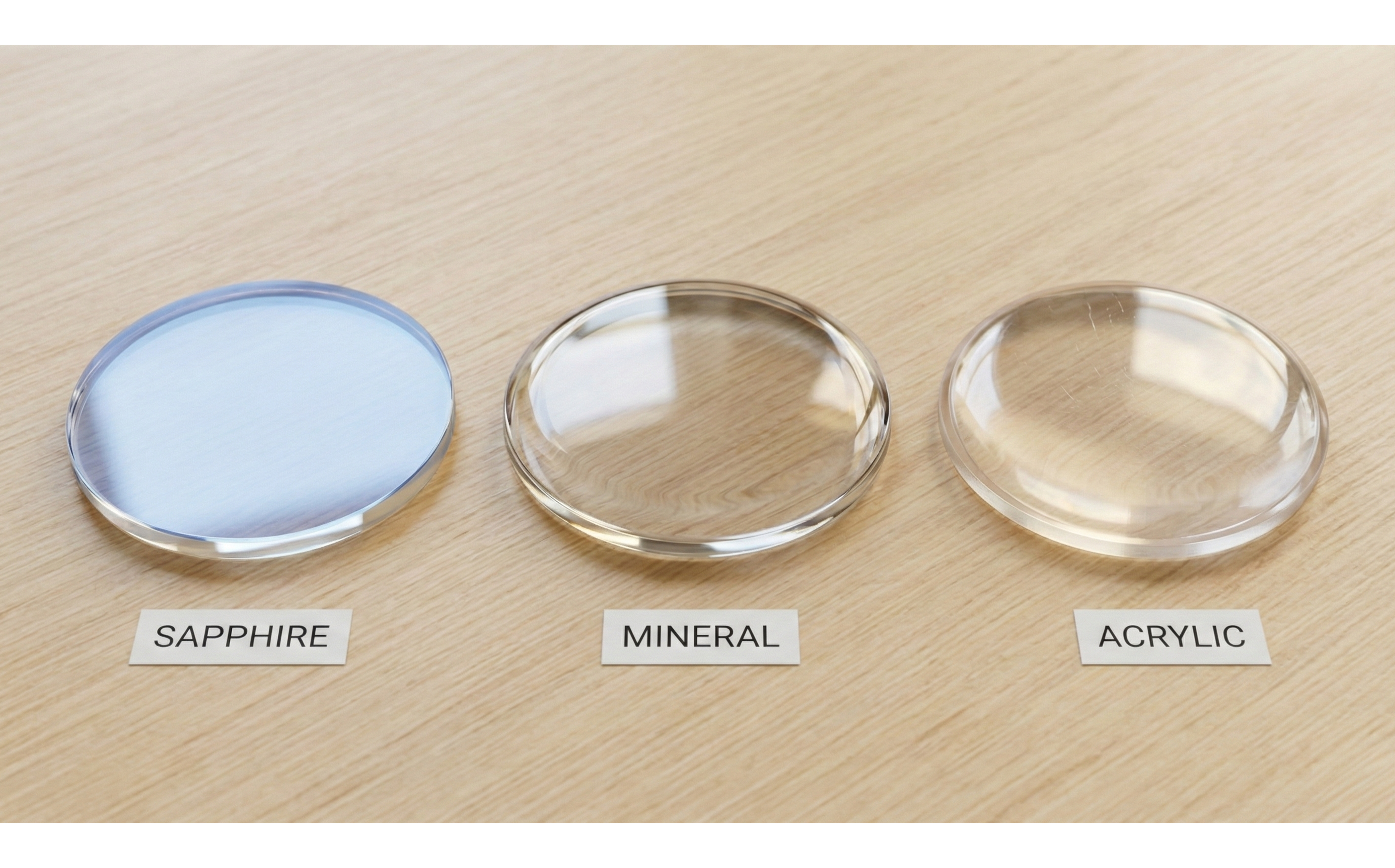
1. Mineral Glass (The Budget Choice)
Found on: Most watches under ₹30,000 (Seiko 5, Citizen, Fashion Brands like Fossil/Armani).
Mineral glass is essentially standard glass that has been heat-treated or chemically treated to be tougher. It is decent, but it has a major weakness.
- Pros: It is cheap to produce. It is fairly impact-resistant (it might not shatter if you drop it).
- Cons: It scratches easily. If you brush your wrist against a brick wall, a door frame, or even your car keys, you will get a scratch. And unlike acrylic, you cannot polish these scratches out. Once it’s scratched, it’s scratched forever.
Verdict: Acceptable for a “beater” watch, but avoid it if you are spending over ₹40,000.
2. Sapphire Crystal (The Gold Standard)
Found on: Almost all Swiss watches over ₹50,000 (Tissot, Hamilton, Longines, Rolex).
Sapphire crystal isn’t actually glass. It is synthetically grown aluminum oxide that is sliced by diamond saws.
- Pros: It is incredibly hard. On the Mohs scale of mineral hardness, diamond is a 10, and sapphire is a 9.
- The “Key Test”: You can literally take your car keys and drag them forcefully across a sapphire crystal watch face. Nothing will happen. It is virtually scratch-proof in daily life.
- Cons: It is expensive to make. It is also more reflective than mineral glass, so you need to ensure it has AR (Anti-Reflective) Coating.
3. Acrylic / Hesalite (The Vintage Choice)
Found on: Vintage watches, Swatch, and the Omega Speedmaster Professional (“Moonwatch”).
This is basically plastic. It sounds cheap, but collectors love it for a specific reason.
- Pros: It has a warm, vintage glow that glass can’t replicate. It is shatter-proof (NASA chose it for the Moon landing because if it broke, it wouldn’t send glass shards floating in zero-G).
- The Magic Trick: It scratches very easily, BUT you can fix it. A ₹500 tube of Polywatch polish and a cloth can remove scratches in 2 minutes.
The Verdict: Which One Do You Need?
- Buy Sapphire If: You want your watch to look brand new 10 years from now. For any daily-wear watch over ₹40,000, insist on Sapphire. It is non-negotiable.
- Buy Mineral If: You are buying a budget Seiko (like the new Seiko 5 Sports) and simply love the design. Just be careful with door frames!
- Buy Acrylic If: You are buying a vintage piece or the specific Omega Moonwatch and want that authentic retro feel.
Pro Tip: How do you tell the difference?
Put the watch against your cheek. Sapphire feels ice-cold instantly. Mineral glass feels cool but warms up quickly. Acrylic feels room temperature/warm.
Ready to find your Sapphire watch?
- Best Value: Tissot PRX Review (Sapphire included)
Start Here:The Ultimate Guide to Swiss Watches Under ₹1 Lakh